The Government of India has revealed that 377 aircraft operating in the civil aviation sector have been identified with repetitive defects since January of last year, a development that underlines ongoing safety oversight and technical vigilance by aviation authorities. The disclosure reflects a systematic effort by regulators and industry stakeholders to track and address recurring technical issues that may affect aircraft reliability and operational integrity.
According to officials, these instances of repetitive defects were logged during routine inspections, maintenance checks and regulatory audits conducted across airlines and maintenance organisations. A repetitive defect refers to a fault or malfunction that recurs on the same aircraft or on multiple aircraft of a similar type, and which may indicate underlying design, maintenance or operational issues that warrant focused attention.
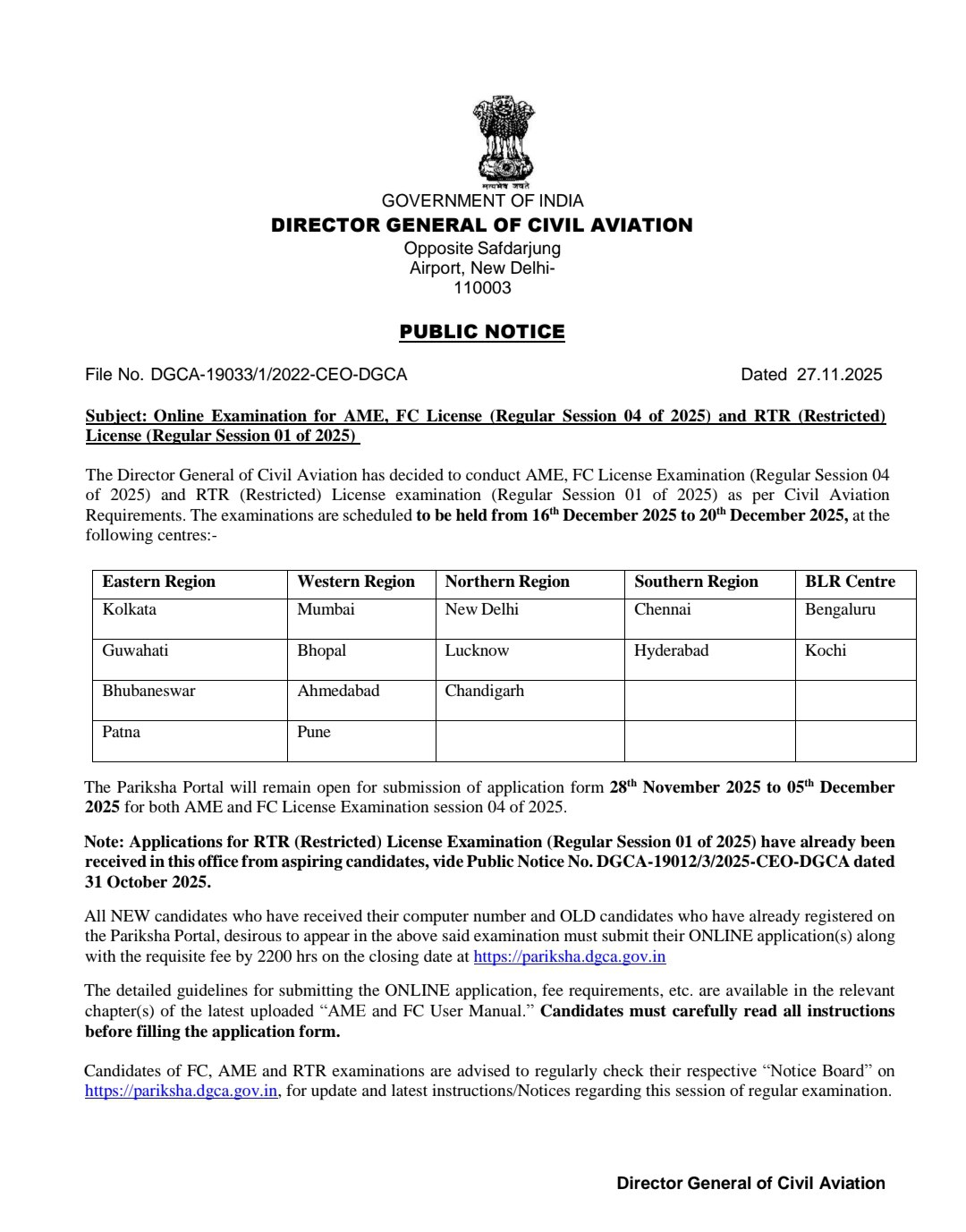
The Directorate General of Civil Aviation (DGCA), which oversees safety and airworthiness standards in India, has been monitoring these trends as part of its mandate to ensure that aircraft operating in the country meet stringent regulatory criteria. Identification of repetitive defects triggers a sequence of actions, including technical evaluation, coordination with manufacturers, and issuance of service or airworthiness directives where necessary to mitigate risk and prevent escalation.
Officials emphasised that the identification of such defects does not necessarily imply an immediate safety hazard to passengers or crew. Many reported defects may be minor or related to non-critical systems, and are addressed through standard maintenance processes or component replacements. However, tracking patterns of recurrence allows regulators and operators to detect systemic issues early and implement corrective actions before they compound into more serious problems.
Repetitive defects can arise from a variety of causes, including wear and tear due to operating environments, manufacturing tolerances, maintenance practice variations, or in rare cases, design shortcomings. The aviation regulator’s role includes analysing defect data, working with airlines to enhance maintenance protocols, and liaising with original equipment manufacturers (OEMs) where design or part reliability concerns emerge.
Industry experts say that proactive monitoring and reporting of recurring defects is a hallmark of robust aviation safety culture. By documenting and reviewing fault patterns, airlines and regulators are better equipped to adjust inspection intervals, improve technician training, and refine maintenance documentation to address root causes. Such data driven approaches contribute to improved aircraft reliability and safety outcomes over time.
In recent years, global airworthiness authorities have increasingly emphasised the importance of recurrent defect tracking as airlines operate diverse fleets amid evolving traffic patterns. The practice helps ensure that aircraft are maintained to the highest standards and that any emerging trends are communicated quickly across operators, particularly for aircraft types with extensive global service histories.
In India, the DGCA’s oversight framework includes mandatory reporting by airlines and maintenance organisations, regular surveillance audits, and coordination with international civil aviation bodies to share insights and comparative data. When defect patterns suggest a common issue across a fleet type, the regulator may prompt manufacturers to issue revised service bulletins, enhanced inspection criteria, or updated part specifications.
Airlines, for their part, are required to act on such directives and integrate corrective measures into their maintenance planning. This collaborative ecosystem is designed to reinforce safety without unduly disrupting commercial operations. Instances of repetitive defects can also inform airline fleet management decisions, including scheduling aircraft for heavier maintenance checks or concentrating specific aircraft types in maintenance hubs.
The Government’s disclosure of the 377 flagged aircraft aligns with broader efforts to communicate regulatory oversight and reinforce public confidence in aviation safety. It signals that authorities are actively monitoring technical performance and working to ensure that recurring issues are identified, analysed, and addressed through structured processes.
As air travel demand continues to grow and aircraft utilisation increases, maintaining a close watch on defect trends remains a priority for both regulators and operators. The airline industry’s ability to adapt and respond to recurring technical challenges will play a role in sustaining reliable operations and supporting India’s expanding civil aviation market.